





Anthrogen introduces Odyssey, the world's largest and most powerful protein language model.
18 October 2025

Intelligence
Intelligence

The understanding of abundance


Implications
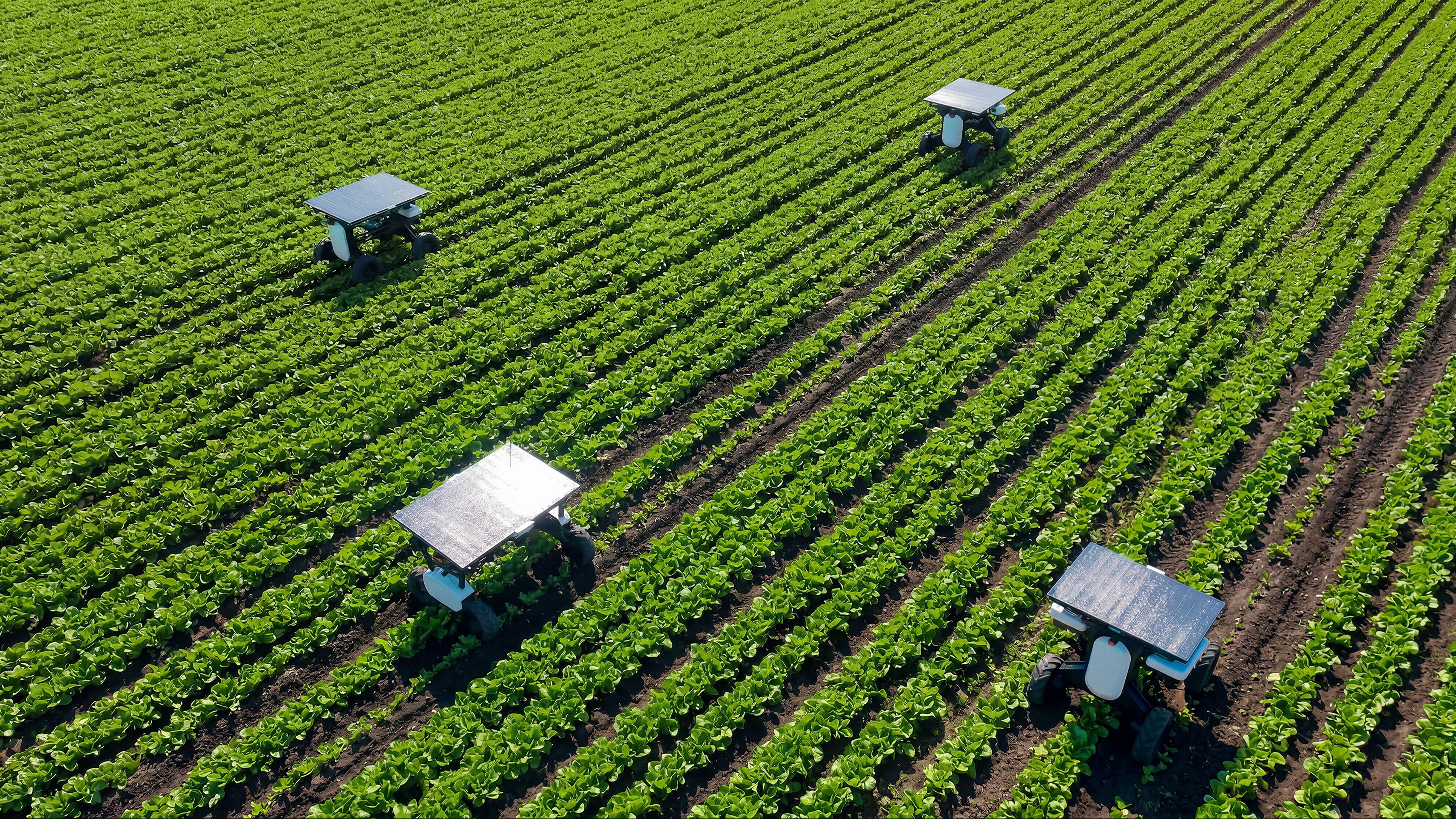
This super intelligence is moving out of the abstract and into the physical world: robotics that extend human capability, biological systems that design and self-replicate, materials that respond to and shape their environment.
Intelligence is not the end-state. It is what makes all other destinations become reality.
Human-generated text is nearly exhausted as a training source. There are approx. 300T text-based tokens.
10¹⁵
There is near-infinite data for training physical world models with 10⁸⁰ atoms in the observable universe.
10⁸⁰
The frontier of super intelligence is even larger with 10³⁹⁰ possible proteins.
10³⁹⁰
Physical embodiment of intelligence has only just begun. Deployed robots will grow 5x by 2035 to 250m.
250m
Companies
“Humanity has barely scratched the surface of Earth Observation’s intelligence value. Doing so effectively could lead to an important path to superintelligence. If we got to where we are with LLMs and memorizing the internet, imagine what we could do with all of earth's data humanity has been collecting for decades - presumably a lot more.”
Kelly Zheng
CEO and Co-founder, Hum

Applications
Living things, computer programs, and robots all need a basic sense of what things are and how they behave to survive and act in their world. A world model is that mental model—the compressed explanation of reality an intelligent system will learn and rely on while navigating new experiences, predicting what comes next, and acting in the world.
Using AI to engineer biology as a giant design space. Machine learning mines billions of years of evolution for clever solutions and to learn the rules of what’s possible, and synthetic biology builds new molecules, medicines, and machines using life’s own toolkit.
Machines that learn and think through many senses at once, like animals do. They weave sight, sound, touch, and other beyond-human signals into one rich picture of the world instead of relying on a single feed or text labels.
A computer’s architecture — how its hardware is organised — shapes what it’s good at. Alternatives like neuromorphic and analog chips are suited to the kinds of information processing that raise the ceiling for physical intelligence - sensing and reacting quickly on very little energy, learning continuously in the wild, and processing billions of messy inputs at once.
Superintelligence is intelligence that far exceeds human capability and comprehension. Planetary superintelligence comes from reading, understanding, and learning from the world’s complex natural systems — swarms of ants coordinating, plants communicating, the planet regulating itself. The result is a shared web of explanations and solutions to problems no one mind—living or machine—could produce alone.
Engineered systems capable of holding up in a changing world with infinite possibilities — artificial intelligence built to listen, adapt, and discover something new and meaningful, across domains.
AI built into physical machines and robots that learn by doing, improving their models by interacting with the world. The same hardware that senses and moves also runs the learning, instead of relying on a distant cloud or central brain.
Biological compute substrates are things that are alive (or built from living parts) used as hardware for intelligent machines. They inherit the computing tricks life already figured out: sensing and reacting with almost no energy, learning and adapting without reprogramming, repairing or replicating themselves, changing physically as conditions shift, and coping with ambiguity instead of needing perfect inputs.
Signals
